Natural vs. Unnatural Design
Share this:
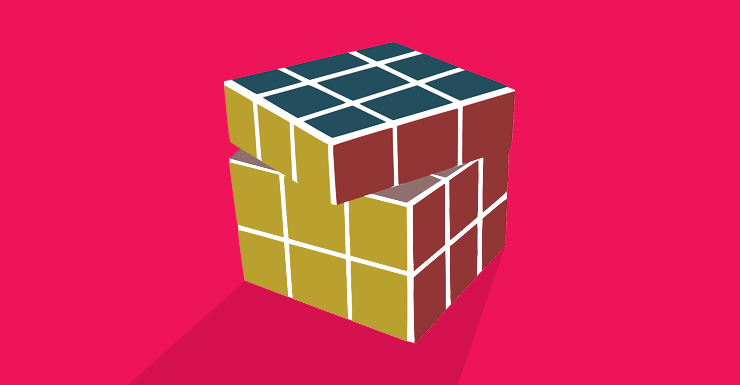
Have you ever visited a website that, when prompted, would take you to a new page by sliding the current page away to the side and off the screen? Another visually interesting way to achieve this experience is to scroll a user down a site to their destination, and have the navigation bar travel with them to simulate sliding documents on a surface. These are just some of many ways to achieve what is now being referred to as Natural Design.
The internet houses a wealth of information across as many sites as you can imagine, but the majority of them function as portals to additional pages of information separate from the homepage. The average reader has grown accustomed to this portal functionality, but the experience is entirely unnatural and creates a space that has little or nothing to do with physics and the way we as humans directly affect our environment. For example, a tile laying on a surface will slide in the direction you drag it and reveal the layer below, as opposed to teleporting you to a new space - this is the quintessential philosophy driving natural design in the digital world.
Consider Snapchat. Yes, the application has the standard pain points of some bad press and reckless users, but past that is a suite of communication tools that are about as natural as the web and mobile have ever seen. Where a multitude of other chat mediums keep a store of information, Snapchat recreates the urgency and the focus of real conversation with ‘press to talk’ video chat and fleeting messages. Users must choose what to devote to memory, and what to share - because saving and editing are non-existent.
In a similar fashion, Google is rolling out a unified digital design (see our blog post) built so heavily on the philosophy of natural physics, that they’re calling the project Material Design to reflect how tiles and documents will act like real objects inhabiting a physical space. Not only is their range of web applications going to be stylistically consistent, it will also emulate an immersive, responsive experience that feels just a little more human.
Here’s the truth: your design decisions have implications and will affect your user-experience (UX). Launching a redesigned website, a stronger social media presence, or a fresh commitment to mobile should be at the core of your digital marketing aspirations, but the feel of your design is the soul of your website. Take the time to reflect on how your market interacts with your content and your products, and venture into the limitless, sometimes bizarre world of web design. There’s very little that can’t be done, and it's becoming easier and easier to replicate natural human motion and experiences with digital design.
Check us out on Facebook, Google+, and Twitter. For more news and tips from Headspace, fill out the subscription field below to get great content straight to your inbox!
Comments
comments powered by Disqus