You searched for "" found 58 results.

11.19.2014
| in
Announcements
Design & UX
Technology
| by Brian Troke
|
With all the talk about UX these days, it's sometimes easy to get it
confused with user-interface (UI) design. For example, someone might
say, "Hey, I like X's website better than Y's because it has a better
UX". Translation: 'X's website is more visually attractive'.
But here's an important point to consider: User-Experience is everything about your product/brand that a user experiences.
That might seem really obvious and not-too-insightful. Here's what I
really mean by it; Your Chief Financial Officer doesn't impact UX
whatsoever because customers generally has no idea what the financial
status of a company is (excluding publicly traded companies, of course)
and even if they do it has to be very poor for it to affect their choice
to use your product.
Read More >>

11.19.2014
| in
Announcements
Design & UX
Inbound Marketing
Technology
| by Brian Troke
|
We work with a lot of companies and organizations at Headspace. For many of them, the process goes like this:
-
find a budget to re-design the website
-
put out an RFP
-
hire the right company for the job
-
Work with said company and launch the site
-
Ignore the relaunched website for another 3-5 years until they get another budget to re-design.
Sadly, this is the way economics work for these organizations.
But there's a better way.
Read More >>
11.19.2014
| in
Design & UX
| by Ashley Hurshman
|
Our own Kyle Racki gave an hour presentation at the Professional Development Summit on April 29th regarding UX design, and wanted to share the presentation for all those interested.
Read More >>

11.19.2014
| in
Technology
| by Ashley Hurshman
|
Let me start this post by making it clear that the traditional process for conducting requests for proposals (RFP) is probably the worst way to evaluate a web design partner (I loathe the term ‘vendor’ as it bears a striking resemblance to ‘vending machines’. Pushing a designers buttons does not a good website make).
Read More >>

11.19.2014
| by Kyle Racki
|
I was recently asked by an interviewee what I think makes a good developer great. It's an interesting question, because since I'm only a pseudo-developer, what gives me the right to answer that question? Well, the fact that I hire and employ developers means that I need to be able to recognize talent, as well as attract and retain great developers, not just good ones.
Read More >>

11.19.2014
| by Kyle Racki
|
Just recently, a big change came along in web design; Arguably the biggest revolution since modern web standards in the early 2000's. Responsive Design has been invented. It's a term used in new age architecture to describe buildings that behave 'responsively'. That is, they adapt or respond to conditions such as the amount of people in a given room, for instance.
Read More >>

11.19.2014
| in
Design & UX
| by Kyle Racki
|
Many business owners and marketing professionals are used to hearing the term "UX" (short for User Experience) thrown around a lot in recent years. Some may think it's just an industry buzzword with no real meaning. Well, I can say it's not. Read on to discover all you need to know to get the gist of UX.
Read More >>

11.19.2014
| in
Design & UX
| by Kyle Racki
|
This post is not meant to be particularly insightful or surprising—just a simple observation that may generate discussion. I don’t claim to be an expert in advertising, though I did work in an ad agency for a couple of years, and had some fun coming up with headlines while throwing a rubber ball against a wall.
Read More >>

11.19.2014
| in
Design & UX
Technology
| by Kyle Racki
|
As many of you know, we over at Headspace are big fans of ExpressionEngine. Whenever we train our clients on how to use their CMS, we also provide a printed and digital PDF which acts as a quick reference guide. This is great for when clients are trying to remember how to use certain functions of the CMS, and calling us isn’t convenient.
Read More >>
11.19.2014
| in
Design & UX
| by Kyle Racki
|
Back by popular demand, we're happy to present you with the second edition of the ExpressionEngine client guide. It is an attractive PDF instruction manual that developers can deliver to their clients as a handy reference for basic administrator functions of EE.
Read More >>

11.19.2014
| in
Design & UX
Branding
| by Kyle Racki
|
So recently, a rather bold individual walked into our offices and proclaimed how 99designs has made our jobs obsolete, and now any company can get top-quality designs at bargain basement pricing. How true is his claim?
Read More >>

11.19.2014
| in
Design & UX
Branding
| by Ashley Hurshman
|
Kickoff meetings with our clients are crucial for helping us get to know each other. They get to meet the team that will be working on their new website, app, or strategy. We get an in-depth view of their business, their website objectives, and perhaps most importantly, how they want their brand to be portrayed. We always like to ask clients to put a face on their brand, a personality. Putting a face on your brand - not your customers or your target market, but your actual brand - is an interesting exercise. So often, clients will say that their brand is cool, casual, friendly, and approachable.
Read More >>

11.19.2014
| in
Design & UX
Tips
| by Ashley Hurshman
|
One of the biggest problems that can arise working on any creative project, online or otherwise, is when people don’t recognize of the value of time. The end deadline is looming – website launch, campaign in market, or gala event scheduled - yet milestones are missed. Everybody starts getting anxious. In the case of an online project, the developer can’t start working on the website back end because the design isn’t approved. Everybody’s work is delayed. Before you know it the project is off the rails, team members are on edge, and the site launches late. The project wraps up, and everyone’s left with a bitter taste in their mouth.
Read More >>

11.19.2014
| in
Technology
Tips
| by Ashley Hurshman
|
When you seek out the right tools and succeed in creating a memorable platform for clients or readers to engage with, the result is highly rewarding, and will take your brand or site to the next level. But don’t stop there!
Read More >>

11.19.2014
| in
Web Highlights
| by Ashley Hurshman
|
Headspace is launching a Web Highlights series, taking a look at some of the web's most useful and creative destinations. This week's highlight is Kitchensurfing, an elegant online solution for finding and hiring talented local chefs to cater for you and your friends, in your own home.
Read More >>

11.19.2014
| in
Announcements
Tips
| by Ashley Hurshman
|
Canada’s Anti-Spam Legislation, known as CASL, is designed to change the way Canadian businesses connect with target audiences online. At its core, CASL is positioned to protect Canadians from receiving commercial electronic messages absent consent or permission, including email, social networking, and text messages.
What this means is that electronic messages purposed to encourage participation in a commercial capacity, such as the selling of a product or service, must adhere to the regulations outlined by CASL. The majority of this new law will come into effect on July 2014 - here are some quick tips to ensure you’re in compliance by then.
Read More >>

11.19.2014
| in
Announcements
| by Ashley Hurshman
|
At Headspace, we’re invested in the informative and interactive facets of the web. With that said, our approach to producing engaging content for our readers is expanding! Now, you can expect interesting opinions, news articles, and a rejuvenated social media presence to keep you in the loop on all things digital.
The first step was a complete visual overhaul. We’re inspired by clean, meaningful design, and you’ll see that same inspiration shine through in our new look.
Read More >>

11.19.2014
| in
Branding
Tips
| by Ricky Ferris
|
When you're planning a web presence, it helps to think of the process as similar to hiring a full time employee. This personality must possess a carefully selected skill set that fulfills a need, and characteristics that are in sync with the company’s.
Developing a Web Presence is no different.
Read More >>

11.19.2014
| in
Design & UX
Tips
| by Brian Troke
|
During it’s 2014 I/O conference, Google announced the future of their unified design efforts: Material Design. A flat, colourful visual theory that’s built on ideas of tactile reality and inspired by paper and ink. The end goal is an immediately familiar functionality that’s meaningful and consistent across devices, which “reflect a different view of the same underlying system”.
But why does any of this matter? Why is Google, or anyone for that matter, pouring time and creative energy into a theme is stylistically consistent across not only hardware, but software as well?
Read More >>

11.19.2014
| in
Technology
| by Brian Troke
|
Apple is famous for revealing the next big piece of hardware or software at their events. The excitement is palpable among users and fans of the tech giant, but this year at their 2014 WWDC, Apple surprised everyone with an additional announcement beyond OS X Yosemite and iOS 8: Swift, an all new programming language designed to make application development a breeze.
Fast, modern, safe and interactive, Swift, as Apple says, “totally rules”.
Read More >>
11.19.2014
| in
Web Highlights
| by Ashley Hurshman
|
This week’s highlight is Vox Media’s Polygon, a stylish and colourful hub for all the gaming information you could ever want or need. From console games to eSports, board games to tech news, if you’re invested worlds other than our own this is some of the sharpest, most interesting content you can find.
Vox Media has made a name for itself employing interesting writers from every corner of the web and publishing some of the most current, thought provoking content...
Read More >>
11.19.2014
| in
Design & UX
Tips
| by Ashley Hurshman
|
Here’s the reality: everywhere you go, you have your smartphone. Waiting for appointments, commuting, working, resting - at any given time, you’re browsing the internet, doing research and probably on social media. These habits aren’t new, but the medium that we view our media on is.
Read More >>

11.19.2014
| in
Design & UX
| by Brian Troke
|
Have you ever visited a website that, when prompted, would take you to a new page by sliding the current page away to the side? Another visually interesting way to achieve this is to scroll a user down a site to the page in question, and have the navigation bar travel with them. These are just some of many ways to achieve what is starting to be referred to as Natural Design.
Read More >>

11.19.2014
| in
Branding
Tips
| by Ashley Hurshman
|
Sometimes at Headspace, we simply have too many ideas to fit into one blog. For those times, we bring together our best digital designers and have them create a factual, visual representation of information relevant to web design and digital marketing - the results are fantastic!
Today, we’re proud to present our Digital Strategy Infographic, your guide to brand identity, meaningful content, and social media. With these stats and insights, you’ll be well on your way to reaching your online target market in some cool new ways. The best part? The information will always be on hand!
Read More >>

11.19.2014
| in
Web Highlights
| by Ashley Hurshman
|
Web Highlights is an ongoing series showcasing some of the brightest and most useful destinations online, celebrating imaginative minds that come together in Web Development to make internet a more interesting place. This week’s highlight is Shapeways, a New York based startup that literally sells anything, by using 3D printing to turn raw materials into original products.
The digital marketplace is at a turning point. Research firm Futuresource Consulting has forecasted that the 3D printing industry will be worth $7.5 billion dollars by 2018, and as companies like Shapeways continue to make 3D printing accessible to the masses online, more and more customers will opt to have their ideal product created rather than search for the closest compromise.
Read More >>

11.19.2014
| in
Tips
| by Ashley Hurshman
|
Any longtime user of Twitter, Instagram, Google+, or more recently Facebook will recognize this symbol: #. What many of us refer to as the pound or number sign (at least, that’s what it’s called on a phone) actually has an entirely separate function when used on varying web platforms and followed by specific terms.
Read More >>
11.19.2014
| in
Technology
| by Brian Troke
|
In 2006 the internet was a great deal different. Firefox v1 had just been released to the public, and Google’s Chrome would be baking for another two years. It was then that Internet Explorer 7 was released into the wild, replacing the aging Internet Explorer 6. At the time, IE7 was considered a massive improvement over its archaic predecessor, embracing modern emerging web standards and paving the way for future iterations.
Fast forward to today. After seven years of web standard evolution and simplification, the gap between IE7 and modern browsers has become a drastic enough disparity that developing new websites to be functional on IE7 and its younger successors adds realistic time and cost factors to any project. These limitations are so restrictive that in some cases new and advanced development methods are forfeit when developing for these browsers.
Read More >>
11.19.2014
| in
Web Highlights
| by Ashley Hurshman
|
This week's highlight is Dribbble, a community of designers who regularly update the site with ongoing digital projects. Anyone from web and graphic designers, illustrators, icon artists, typographers and logo designers share small images of their work (what Dribbble refers to as "shots") that highlight an artist's workflow and current projects.
What one might consider to be the LinkedIn for designers, Dribbble is headquartered in Salem, Massachusetts, and is a relatively small bootstrapped company whose goal is to work with the industry's design talent to get hired and showcase some truly awe-inspiring work.
Read More >>
11.19.2014
| in
Design & UX
| by Ricky Ferris
|
Fonts and typefaces are the stylistically different words that make up at least half of our interaction with the web. They define spaces, tones, and everything we see or read that isn’t videos or images, and yet despite this fonts and typefaces get little credit and even less consideration.
How often do you visit a site and think to yourself “Wow! This font really brings the page together? For most, a website is the coming together of two important components, those being design and content.
Read More >>

11.19.2014
| in
Web Highlights
| by Ashley Hurshman
|
Web Highlights is an ongoing series showcasing some of the brightest and most useful destinations online, celebrating the imaginative minds that come together in Web Development to make the internet a more interesting place.
This week’s highlight comes to you direct from the state of Maine, where The Maine Thing Quarterly draws its inspiration. Advertised as ‘Quintessentially Maine’, The Maine Thing Quarterly is a tourism magnet, travel guide, and online magazine all wrapped into one decidedly attractive website.
Read More >>
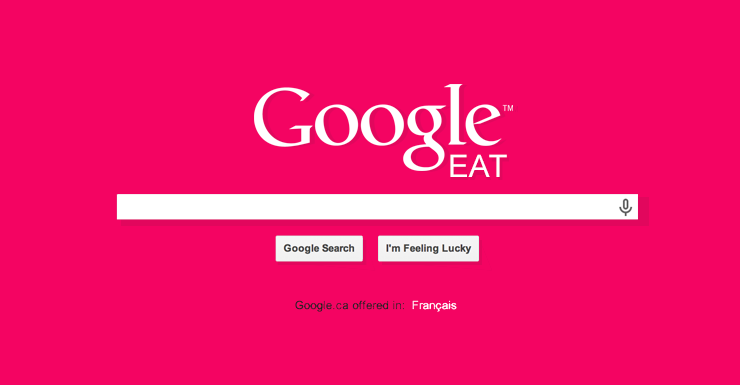
11.19.2014
| in
Announcements
Technology
Tips
| by Ashley Hurshman
|
In case you missed it, a leaked internal document from Google has provided some extremely valuable information related to what their Quality Rating Program looks for when determining how close it will place your website to number one in a search related to you.
'E-A-T' as it's abbreviated, is a major part of Google's Quality Page Ranking Guidelines. It illustrates the study of topic-relevant expertise to evaluate the authority and trustworthiness of a given website, and ranks them according to these metrics. Think of the E-A-T guidelines as an officially documented breakdown of information that has already been widely acknowledged by web developers and ranking specialists. None the less, a specific map of Google's ranking methodology, direct from the source, should not be overlooked!
Read More >>

11.19.2014
| in
Design & UX
Tips
| by Ricky Ferris
|
Web developments are always on the move: new technologies, design styles, and methods for presenting and delivering content to your market. As the web changes, there is a attractive tendency to jump ship to every new ‘innovation’ in an effort stay current. Should we all follow trending new practices and ideas, and what are the effects that this mindset has on a brand as it adapts to capitalize on an ever-evolving digital landscape?
Read More >>

11.19.2014
| in
Technology
| by Brian Troke
|
As the internet continues to grow and change at a rapid pace, one facet of the web continues to stand the test of time as the most important rule: Content is king. While your website’s aesthetics and usability will always be important, they alone will not draw in an audience. Written, visual, or product content - the key aspect of your website is what it offers people. Creating this content is paramount to a website’s success, and having a quality CMS as the foundation of your site is what makes this content creation faster, easier, and cheaper.
Read More >>

11.19.2014
| in
Tips
| by Ashley Hurshman
|
So! You have a website, which means people can find you, your content, and your products online. This is great, but do you know how they’re finding you? Knowing exactly how your traffic is reaching your website is equally as important as what they’re doing when they get there.
Google Analytics is a free tool offered by tech giant Google. It’s a diverse and powerful utility that will help you to increase the effectiveness of your online presence as soon as you adopt it. No joke - this is a big one.
Read More >>
11.19.2014
| in
Web Highlights
| by Benjamin Sullivan
|
This week’s highlight comes in the form of a portfolio website for mobile app development firm Ramotion, this company of 25 develops user-targeted apps for startups and businesses, and takes no issue with showing off their incredible results on an equally well designed website.
Read More >>
11.19.2014
| in
Announcements
| by Ashley Hurshman
|
For as long as we’ve been in business, we’ve always been huge proponents of content. Whether it was content for a website, or for a social platform, for us content has always been king. As this became more important to us internally as well as our clients, we decided that it was time to finally make a permanent addition to our team to product a steady stream of insightful and useful content not only for ourselves, but our clients. I’m happy to finally announce that we’re making that full-time addition to our team!
Read More >>

11.19.2014
| in
Tips
| by Benjamin Sullivan
|
The questions to ask in a post-CASL Canada are these: is email no longer a viable means of growing your business, and are interesting email newsletters extinct? The answer to both of these questions, is a cautionary ‘no’.
Read More >>
11.19.2014
| in
Inbound Marketing
| by Benjamin Sullivan
|
Sharing knowledge and ideas has long been one of the web’s best (and sometimes worst) functions. Global conversations have opened a floodgate of debates, leaks, protests, news, and conversations of almost every kind. Some of these conversations might be trivial, but the web houses some of the most interesting, categorically varied knowledge around. This basic premise has created a global stage for the sales, marketing, and entrepreneurial professionals who understand that knowledge and ideas are more lucrative now, on the web, than they've ever been. The only thing that’s changed is the way we get the word out.
Read More >>

11.19.2014
| in
Announcements
| by Ashley Hurshman
|
Most people tend to start their day on a set routine, performing steps in a specific order because you find that they work best for you, and produce the best results. This is our routine.
Read More >>

11.19.2014
| in
Design & UX
Tips
| by Ricky Ferris
|
Websites that use imagery well can market and sell any broad range of products or ideas. Lifestyles, ideals, industry pain points, images can illustrate the tone, and features of a product in a fraction of the time that it would take well written copy. A clear, well shot image is the single best way of ‘selling from a distance’.
Read More >>
11.19.2014
| in
Tips
| by Brian Troke
|
Content is generally the most the most valuable proposition your website offers, and an integral part of that content is its images. In this quest for optimal imagery it’s important to remember the technical elements that will play a part in not only how good things look, but also how they perform.
Read More >>

11.19.2014
| in
Technology
| by Nick Ross
|
Maybe you remember a certain TV program that began with a fuzzy blue monster puppet in a giant leather chair? He began every episode with the same declaration: ‘this is good story about a cookie!’I am of course, talking about Cookie Monster sitting on on Monsterpiece Theatre - a classic. But these aren’t the only cookies that have been around long enough to be considered a classic; computer cookies are essential in online engagements, and have been around long enough to garner quite an intriguing story.
Read More >>
11.19.2014
| in
Web Highlights
| by Benjamin Sullivan
|
Web Highlights
is an ongoing series showcasing some of the brightest and most useful
destinations online, celebrating the imaginative minds that come
together in Web Development to make the internet a more interesting
place.
This week’s highlight may just be the most
recognizable talent show on Earth. They’re mystifying, they’re
exuberant, they’re renowned for their unrivaled skill and presence at
the top of the live entertainment industry. I am of course referring to
Cirque du Soleil.
Read More >>

11.19.2014
| in
Tips
| by Benjamin Sullivan
|
If one thing is true of the internet, it's that the people who populate its forums, visit its websites, and consume its media are the driving force that make the platform interesting and valuable. The users of the web are legion, and they hold the power to bring any publication prosperity or chaos, in more ways than were ever possible in times dominated by print.
Read More >>
11.19.2014
| in
Technology
| by Benjamin Sullivan
|
By broadcasting URLs, the devices that are all around us will communicate with our smartphones/watches/tech to display written content, fully interactive web pages, or deep links into native applications. For Physical Web, deep links are the future that will provide users with instant access to the technology in their environment.
Read More >>

11.19.2014
| in
Design & UX
Tips
| by Brian Troke
|
From a business perspective, intelligent design can be the tipping point that turns a bounce into a purchase, or a reader into a follower.
Read More >>

11.19.2014
| in
Design & UX
| by Brian Troke
|
Yes, aesthetic design is worth your consideration, but it’s certainly not the only ingredient in the pot, nor is it the most important in most cases.
Read More >>

11.19.2014
| in
Design & UX
| by Ricky Ferris
|
Welcome to a developer’s look at what responsive design really is. Let’s take a look behind the curtains and discuss how the magic really works, shall we?
Read More >>

11.19.2014
| in
Web Highlights
| by Benjamin Sullivan
|
The benefits of having an established brand direction or company mantra is that you can call on those familiarities when you’re developing digital products. It’s those familiarities that make you attractive to your market, and though your mantra may be present in every product you develop or platform you’re present on, calling on those pieces of your company culture, visually, can make for quite the experience.
Read More >>

11.19.2014
| in
Technology
| by Benjamin Sullivan
|
Monday was a big day for eCommerce. Apple launched iOS 8.1 and with it came Apple Pay, the service that Apple hopes will lighten the weight of your wallet and make carrying cards a burden of the past.
Read More >>
11.19.2014
| in
Tips
| by Benjamin Sullivan
|
Once you have access to those inboxes, the game becomes radically different. Here, you’re no longer the host to your traffic, you’re the visitor, and there are certain formalities that you must adhere to if you ever hope to be invited back.
Read More >>

11.19.2014
| in
Web Highlights
| by Benjamin Sullivan
|
Web Highlights is an ongoing series showcasing some of the brightest and most useful destinations online, celebrating the imaginative minds that come together in web development to make the internet a more interesting place.
In the case of Sound City Project, the team behind this aural wonder may be showcasing their recording prototype, but how they do it will blow your mind while it stimulates your ears.
Read More >>

11.19.2014
| in
Design & UX
Technology
| by Ashley Hurshman
|
Welcome to part two of a series we’re calling The Headspace Process, a collection of blog posts crafted to shed just enough insight into our stages of development to whet your appetite, without sharing any spoilers or giving away too much of the magic.
Read More >>

11.19.2014
| in
Technology
| by Brian Troke
|
For the professionals who aren’t engrossed in web development, HTML5 and CSS3 are a couple of those arcane terms advertised as the premier formatting that your web-based advertising or promotional campaign needs to succeed.
Read More >>

11.19.2014
| in
Tips
| by Ricky Ferris
|
There’s a question that comes up often in the dark corners of web development board rooms and meetings between peers: why invest in a custom built website when you could pay for a quick, all in one service? Let’s take a look at why you might opt for one or the other, and pit build vs. buy.
Read More >>
11.19.2014
| in
Announcements
| by Brian Troke
|
Today, Firefox Developer Edition launches, and many of the exciting details that were kept under wraps have come to light as the browser lands on the docks and task bars of web enthusiasts everywhere!
Read More >>

11.19.2014
| in
Tips
| by Ashley Hurshman
|
In our growing mastery of expedient acquisition and ownership, we've set aside the need for assistance from sales specialists and business owners - but is that a good thing?
Read More >>

11.19.2014
| in
Technology
Tips
| by Ashley Hurshman
|
SEO, or Search Engine Optimization - it’s one of those arcane terms that you know you need, but aren’t exactly sure what it means. If you do know what it means, then you know that it’s not as simple as looking good in the eyes of Google. It means a lot of specific keyword usage and even more research.
Read More >>